Crack Sealing vs. Crack Filling: How to Choose the Right Treatment and Timing
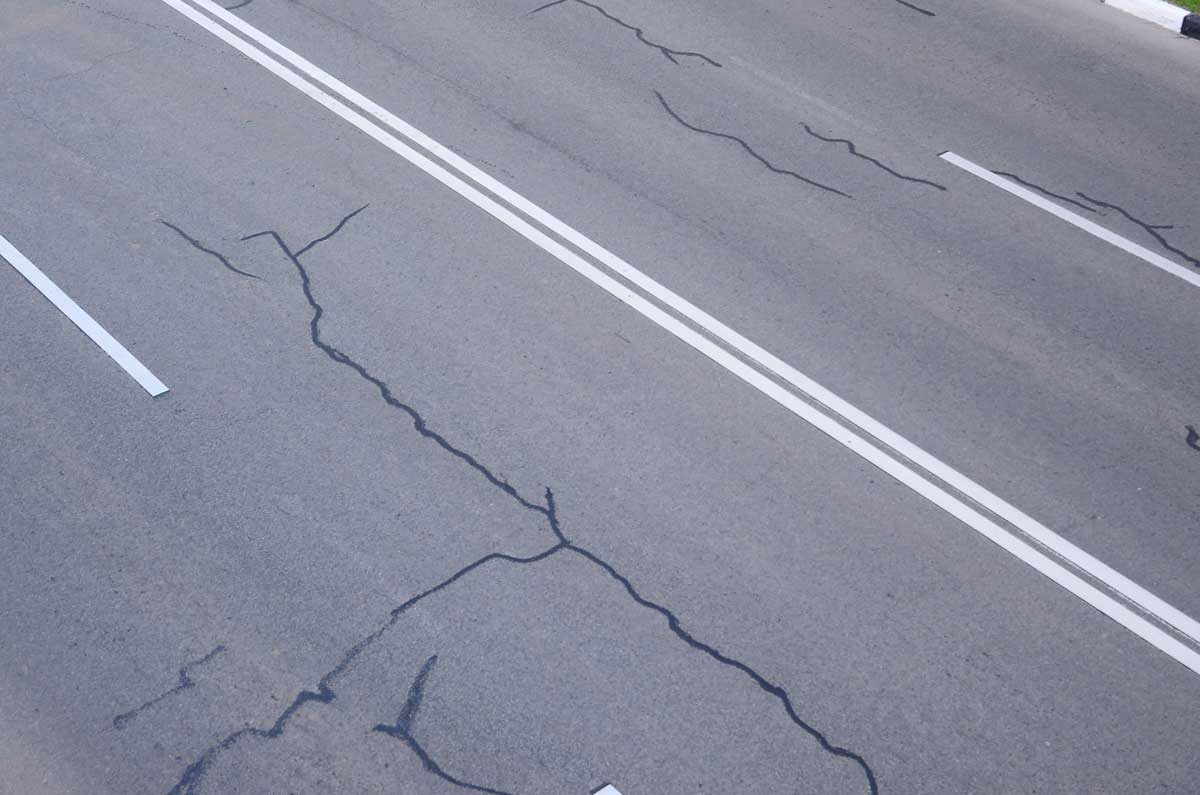
Small cracks rarely stay small. Moisture and traffic turn a hairline fissure into potholes, base failures, and, eventually, a full-depth reconstruction bill. Two frontline countermeasures keep that progression in check: crack sealing and crack filling. They share the same goal, keep water and incompressibles out, but differ in materials, prep work, cost, service life, and the pavement conditions that make one preferable over the other.
Below is a practitioner-focused guide to help highway departments, DPWs, and pavement managers decide which treatment to deploy, and when.
Know Your Crack Types First
Before choosing a treatment, classify the crack you are dealing with. A quick field check with a crack gauge or a pocket ruler will suffice:
| Crack Category | Typical Examples | Annual Movement* | Primary Cause | Recommended Treatment |
|---|---|---|---|---|
| Working (≥ 3 mm movement) | Transverse thermal cracks, reflective cracks over joints, wide longitudinal cracks | High | Thermal contraction/expansion, slab or joint movement | Crack Sealing |
| Non-working (< 3 mm movement) | Block cracks, edge cracks, narrow longitudinal cracks | Low | Asphalt shrinkage, minor load fatigue, density segregation | Crack Filling |
*Measured between cold-winter and hot-summer extremes.
Crack Sealing
| Attribute | Details |
|---|---|
| Purpose | Create a flexible, waterproof membrane that can stretch and rebound with crack movement. |
| Sealant | Hot-poured, polymer-modified asphalt rubber (ASTM D6690 Type II–IV). Typical application temp 370–390 °F (188–199 °C). |
| Preparation | 1) Rout or saw (⅜–½ in. wide, ½–¾ in. deep) for uniform reservoir.2) Clean with hot-air lance to remove dust and dry sides.3) Place backer rod if depth > ½ in.4) Fill flush or slight over-band. |
| Service Life | 5–8 years (up to 10 years with routing and proper sealant). |
| Unit Cost (2025) | $1.75 – $2.75 per linear foot (includes routing). |
| Best Season | Fall or early spring when cracks are at mid-width—sealant neither over-stretched (summer) nor over-compressed (winter). |
| Ideal PCI Window | Network PCI 55–85. Sealing at PCI < 50 yields diminishing returns; consider patching first. |
Why choose sealing?
Because the sealant remains elastic, it protects working cracks through thousands of thermal cycles. If your climate swings from below-freezing winters to hot summers, sealing is the only treatment that will survive the movement.
Crack Filling
| Attribute | Details |
|---|---|
| Purpose | Economical barrier against water for cracks that barely move. |
| Filler | Asphalt emulsion or cutback (CSS-1h, CRS-2) or cold-poured rubberized asphalt (ASTM D6690 Type I). No heating kettle required. |
| Preparation | 1) Blow cracks with compressed air or wire brush.2) Ensure surface is dry and ≥ 40 °F (4 °C).3) Pour or squeegee-spread filler; strike off excess. |
| Service Life | 2–4 years (often extended to 5 when combined with surface seal like chip or fog). |
| Unit Cost (2025) | $0.45 – $0.85 per linear foot. |
| Best Season | Late spring through early fall—warmer temps speed emulsion break and reduce rain risk. |
| Ideal PCI Window | Network PCI 60–90. Fillers are most cost-effective while pavement is still structurally sound. |
Why choose filling?
Filling is fast and inexpensive—perfect for low-traffic roads, subdivisions, or tight budgets. It buys two to three extra winters of service life and can be bundled with a surface treatment like chip sealing for added value.
Timing Is Everything
-
Temperature Balance
-
Sealing: Apply when crack width is ~½ of its annual range (typically 40 °F–70 °F / 4 °C–21 °C).
-
Filling: Warmer days (> 60 °F / 16 °C) ensure emulsions cure before dusk or rainfall.
-
-
Moisture & Weather Forecast
-
Any free water or rain within 24 hours can break the bond. Schedule a 24-hour rain-free window.
-
-
Traffic & Lane Closure Constraints
-
Hot-poured sealants need cooldown time (< 120 °F / 49 °C) before reopening. Plan night shifts or shoulder work on busier corridors.
-
-
Pre-Overlay Prep
-
If an overlay or surface treatment is planned within 6–12 months, fill narrow cracks first; seal wide or working cracks 1 month before overlay to avoid bleed-through.
-
Decision-Making Checklist
| Question | If Yes | Recommended Action |
|---|---|---|
| Does the crack move > ⅛ in. (3 mm) annually? | Seal it. | Crack Sealing |
| Is the pavement > 8 years old but PCI > 55? | Time for major preventive! | Prioritize Sealing |
| Is your budget < $1 per LF and cracks are tight? | Keep it simple. | Crack Filling |
| Are you treating < 8 lane-miles with limited crew? | Time & traffic matter. | Crack Filling or Hire Seal Crew |
| Overlay scheduled within a year? | Avoid high-build bands. | Fill narrow cracks; light-band seal wide ones |
Implementation Best Practices
-
Prioritize by Traffic & PCI: Start with high-traffic arterials in fair condition.
-
Bundle Treatments: Combine filling with chip seal; follow sealing with fog seal stripe to smooth ride.
-
Quality Control: Verify sealant temperature, reservoir dimensions, and adhesion with pull tests.
-
Document & Monitor: Record LF treated, material type, weather, and costs in your pavement management system. Inspect annually.
-
Re-treat on Cycle: Fillers at 3 years, sealants at 6 years—before failures accelerate.
Budgeting & ROI Snapshot
-
Crack Filling ROI: $1 spent can defer $6 in future patching within 24 months.
-
Crack Sealing ROI: $1 spent today can defer $10–$12 in major rehab over a 5-year horizon (assuming hot-mix overlay at $95 / ton).
When applied at the right time, both treatments pay for themselves many times over by postponing costly resurfacing and preserving ride quality.
Key Takeaways
-
Match Movement to Method: Working cracks ⇒ seal. Non-working ⇒ fill.
-
Time It Right: Mid-temperature seasons, dry weather, and before PCI slips below 55.
-
Think Network-Wide: Budget for preventive treatments across all fair-condition roads; don’t chase worst-first.
-
Monitor & Repeat: Pavement preservation is cyclical—not a one-and-done event.
By aligning crack type, treatment method, and timing, you will maximize each dollar, extend pavement life, and keep your road network smoother—and safer—for years to come.
Need help fitting crack treatment into a broader pavement preservation plan? Check out our related article on the 80/20 Rule of Pavement Preservation for budgeting insights.


Life-Cycle Assessment of Pavement Alternatives: Quantifying Environmental Impacts from Cradle to Grave

When Is the Best Time of Year to Sealcoat?

Poor Subgrade Support: Detecting and Fixing the Root of Premature Rutting

Developing a Pavement Rehabilitation Plan Based on PCI Data

Joint Resealing & Spall Repair for Concrete Roads
